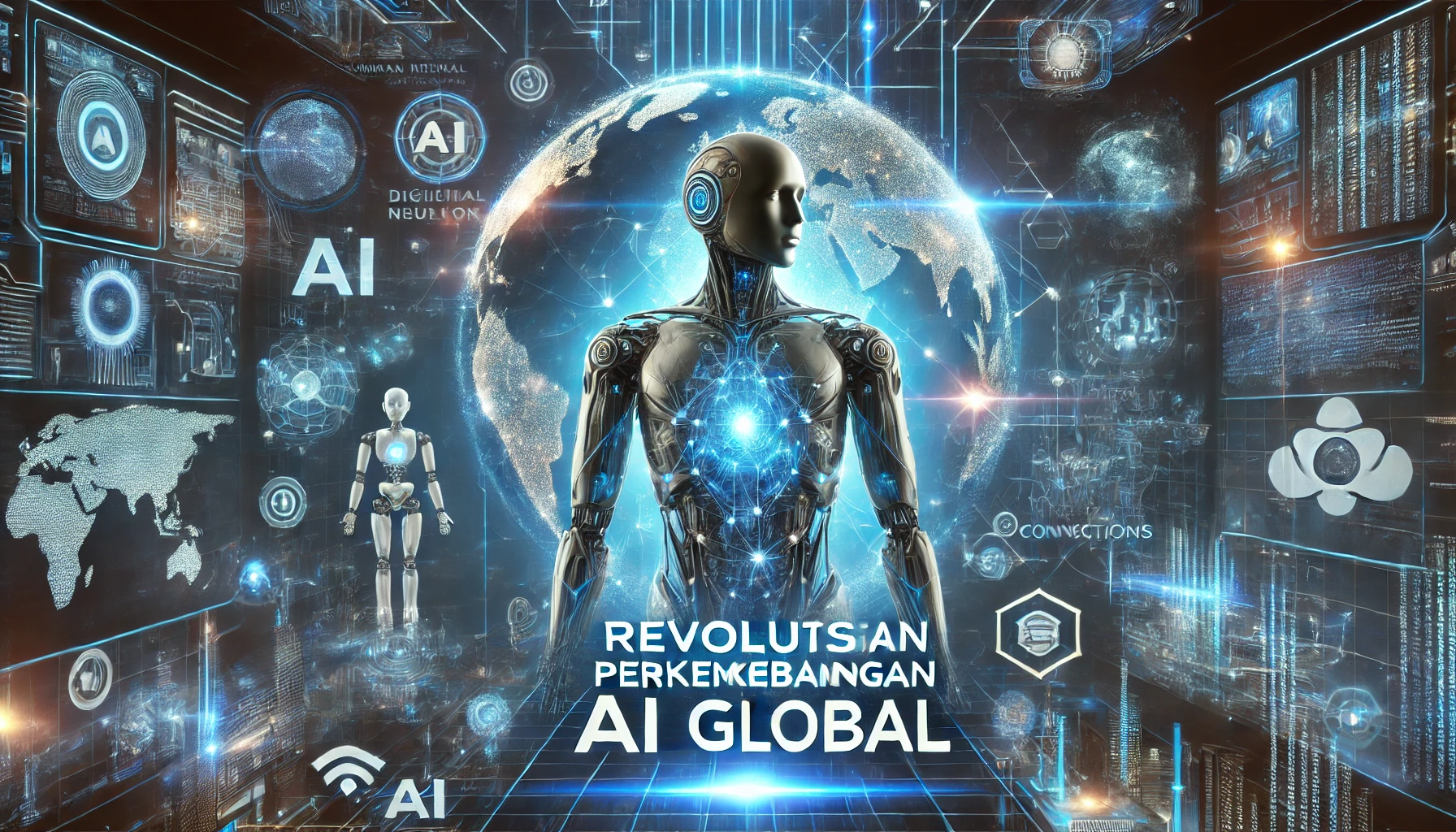
The development of Artificial Intelligence (AI) in the global modern technology industry continues to grow rapidly and has become a major pillar of technological transformation worldwide. The implementation of AI affects various sectors, ranging from manufacturing to digital services.
With advanced data analysis capabilities, AI helps companies make faster and more accurate decisions. This development expands product innovation and increases operational efficiency on a global scale.
The Role Of AI In Modern Industry
AI enables the automation of business processes, reduces human error, and increases productivity. Intelligent systems can learn from data to continuously improve system performance.
This technology simplifies the processing of complex big data, allowing companies to better understand market trends and consumer behavior. As a result, business strategies become more accurate and data driven.
AI also drives innovation in the healthcare, education, and transportation sectors. Intelligent systems can predict risks, personalize services, and create more efficient and secure user experiences.
Global technology companies integrate AI with cloud computing to support large scale operations. This infrastructure enables real time data analysis and makes cross platform collaboration easier and faster.
The implementation of AI also influences the development of robotics, the Internet of Things, and smart devices. Intelligent devices are now capable of performing complex tasks without human intervention, significantly increasing industrial efficiency.
Benefits Of AI In Digital Transformation
The development of artificial intelligence in the global modern technology industry has made AI a strategic tool for increasing industrial competitiveness. Companies can optimize resources and significantly reduce operational costs.
1. Process Automation
Process automation with AI reduces repetitive work and increases operational speed. Systems can execute tasks accurately and consistently without the need for manual supervision.
Automated data processing allows companies to respond quickly to market changes. Real time analysis accelerates strategic decision making.
The integration of AI with business software improves efficiency and reduces the risk of human error. This has a direct impact on overall company productivity.
AI also enables automatic optimization of supply chains and inventory management. Production processes become faster, more precise, and more cost efficient.
2. Advanced Data Analysis
AI can analyze large scale and complex data sets. Machine learning algorithms identify patterns that are not visible through traditional analysis.
The results help companies understand market trends and consumer preferences more accurately. Business strategies become more effective and data based.
AI based predictions enable faster identification of risks and opportunities. Companies can make timely decisions and reduce financial losses.
Data integration from multiple sources improves information quality. AI delivers reliable insights to support product and service innovation.
3. Service Personalization
AI enables real time service personalization for consumers. Intelligent systems adjust content, recommendations, and interactions based on individual preferences.
Personalization increases customer satisfaction and brand loyalty. Adaptive services help companies maintain competitiveness in dynamic markets.
Data collected from user interactions supports the development of more relevant products aligned with consumer needs. This encourages continuous innovation in the technology sector.
Companies can leverage AI for more targeted marketing campaigns. Audience targeting becomes more accurate and promotional effectiveness increases significantly.
4. Supply Chain Optimization
AI predicts demand and manages product distribution efficiently. Companies can adjust inventory levels according to market needs.
AI systems minimize delays and reduce logistics costs. Operational efficiency improves without sacrificing service quality.
The use of AI in inventory management reduces the risk of overstocking or stock shortages. Companies become more prepared to face demand fluctuations.
Predictive analytics help companies plan production strategies more effectively. Business decisions become more precise and efficient.
5. Cybersecurity and Data Protection
AI enhances cybersecurity through automatic threat detection. Systems can identify attacks and take preventive action in real time.
The application of AI protects company and consumer data from breaches and misuse. Information security becomes a top priority in the technology industry.
AI algorithms learn from previous attack patterns to strengthen protection. Security systems become adaptive to emerging threats.
The integration of AI with firewalls and data encryption provides additional layers of defense. Companies can maintain reputation and customer trust.
6. Product and Service Innovation
AI supports the development of new products based on data and market trends. Companies can design features that are more relevant and competitive.
AI assisted prototyping accelerates the innovation process. Time to market for new products becomes shorter.
Consumer needs analysis supports service customization. Products and services align more closely with market expectations.
AI encourages companies to innovate continuously. Competitive advantages can be maintained through adaptation to the latest technologies.
7. Transformation of the Creative Industry
AI influences creative fields such as design, music, and digital media. Systems can generate algorithm based content quickly.
Content personalization increases audience engagement. Creators can focus on creative aspects while AI handles routine production tasks.
User preference analysis helps develop content that is more relevant and appealing to the market. Content production efficiency improves significantly.
The integration of AI in the creative industry promotes collaboration between humans and machines. Creative innovation becomes faster and more impactful.
Conclusion
The development of AI has significantly transformed the global modern technology industry by improving efficiency, innovation, and security. This technology has become a crucial foundation of global digital transformation.
The integration of AI across various sectors accelerates market adaptation, simplifies decision making, and supports sustainable innovation. The future of industry will become increasingly intelligent and efficient.