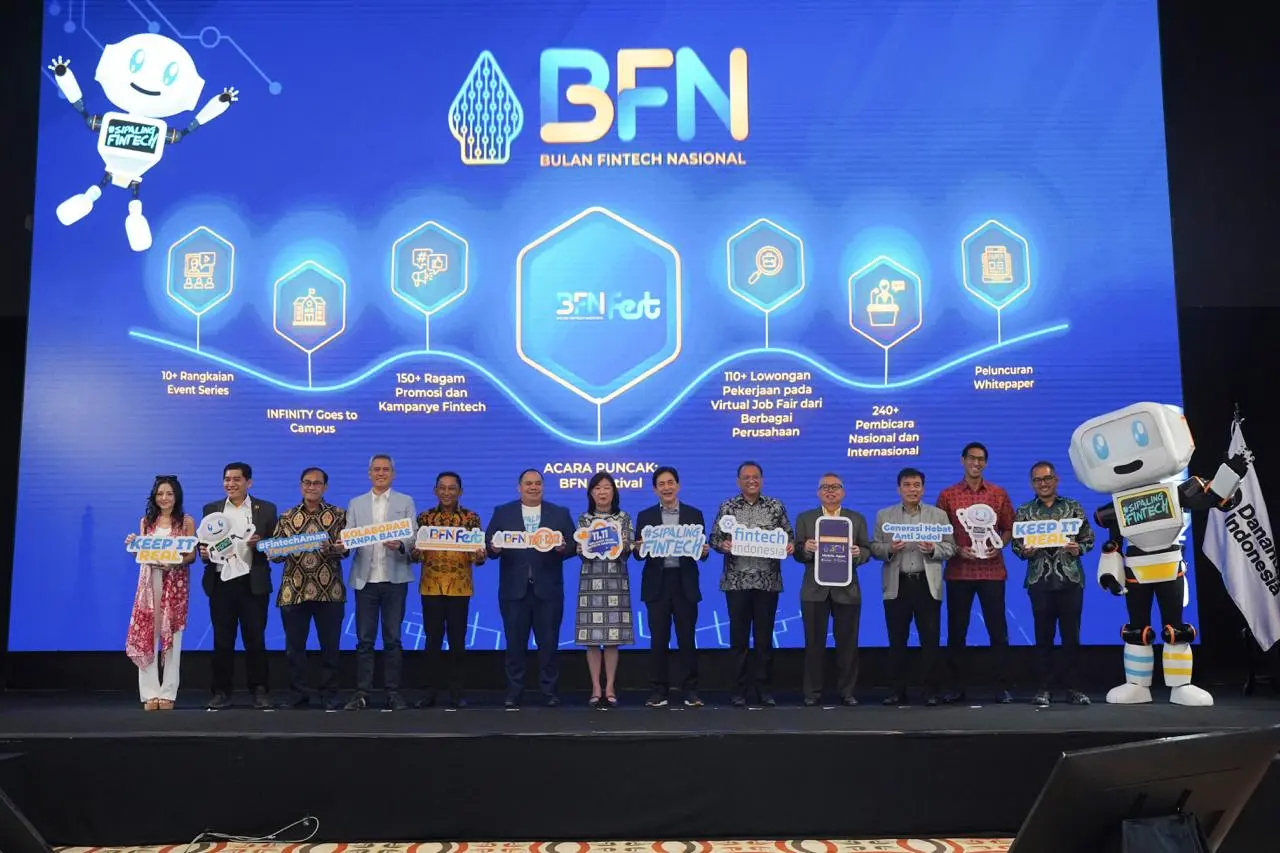
The development of fintech technology has become a key driver of the transformation of Indonesia’s digital financial system. Fintech combines technology and financial services to make transactions faster, easier, and more accessible to the wider public.
The presence of fintech expands financial access for communities that were previously underserved. Application-based services enable transactions without geographical barriers. As a result, national digital financial inclusion has increased significantly.
The Role of Fintech Technology in Strengthening Indonesia’s Digital Economy
Fintech plays a strategic role in strengthening the digital economy through efficient financial services. Payment, financing, and investment processes become more practical with the support of digital technology.
Fintech innovation accelerates the transformation of the financial sector through various digital products. Electronic payment services, online lending, and digital investment continue to grow. This diversity of services enhances the competitiveness of the national financial industry.
Operational efficiency is one of fintech’s main advantages in the digital economy. Digital systems reduce transaction costs and speed up service processes. Consequently, national economic productivity increases sustainably.
Fintech also encourages collaboration between the government, the banking sector, and technology players. This synergy creates a healthy and stable digital financial ecosystem. Adaptive regulation maintains trust and system security.
Beyond the economy, fintech contributes to improving public digital financial literacy. Fintech applications provide transparent information on financial management. Public financial awareness continues to grow.
The Impact of Fintech Development on Digital Financial Inclusion
The development of fintech has a broad impact on national digital financial inclusion. This technology opens equitable access to financial services. Communities can enjoy financial services more easily and securely.
1. Expanding Access to Financial Services
Fintech expands access to financial services through internet-based technology. People in remote areas can conduct transactions without visiting bank branches. Geographical barriers can be significantly minimized.
Fintech registration processes are relatively simple and flexible. Users only need digital devices and an internet connection. This increases participation in the formal financial system.
Broad financial access stimulates local economic activity. Buying and selling transactions become faster and more efficient. Regional economic growth also increases.
The expansion of access positions fintech as a solution for national financial inclusion. Services become more evenly distributed across all segments of society. Financial disparities can be reduced.
2. Promoting Financial Inclusion for MSMEs
Fintech helps MSMEs obtain digital financing through fast processes. Requirements are simpler compared to conventional banking. MSMEs can access business capital more easily.
Data analytics technology is used to assess MSME creditworthiness. Transaction histories form the basis of evaluation. Funding opportunities become more open.
Access to capital increases MSME production capacity and innovation. The competitiveness of small businesses improves sustainably. National economic contributions also increase.
MSME inclusion creates new job opportunities. The growth of small businesses impacts community welfare. Economic stability becomes stronger.
3. Accelerating Digital Financial Transactions
Fintech accelerates financial transactions through real-time payment systems. Transactions can be carried out anytime without cash. User convenience increases.
Digital payments support operational efficiency for businesses. Transaction records are more organized and transparent. The risk of errors can be reduced.
Transaction speed increases public trust. Adoption of digital services becomes more widespread. The digital economic ecosystem strengthens.
Fast transactions form the foundation of a modern digital economy. Economic productivity increases significantly. Digital transformation proceeds consistently.
4. Improving Digital Financial Literacy
Fintech provides financial education features within digital applications. Users learn to manage finances independently. Financial literacy improves.
Data transparency helps users understand their financial condition. Decision-making becomes wiser. Financial risks can be minimized.
Good literacy reduces misuse of digital services. Communities become more alert to fraud. Trust in fintech increases.
Continuous education supports long-term financial inclusion. Communities become more financially independent. Economic resilience increases.
5. Supporting Financial Product Innovation
Fintech encourages innovation in digital-based financial products. Payment, investment, and insurance services become more diverse. User needs are fulfilled.
Digital products offer high flexibility for the public. Services can be tailored to users’ financial capabilities. Financial access becomes more inclusive.
Innovation promotes healthy competition among service providers. Service quality continues to improve. Consumers gain greater benefits.
Sustained innovation strengthens the national fintech ecosystem. Technological adaptation progresses rapidly. Industry growth is maintained.
6. Increasing the Efficiency of the Financial System
Fintech improves the efficiency of the financial system through automation. Manual processes can be significantly minimized. Productivity increases.
Cost efficiency allows services to become more affordable. The number of digital service users grows. Financial inclusion expands further.
Efficient systems support national economic stability. Process transparency increases. Public trust is maintained.
Efficiency forms the basis of sustainable digital economic development. Modern financial systems become stronger. National competitiveness improves.
7. Supporting Sharia Financial Inclusion
Fintech simplifies access to digital sharia financial services. Communities can transact in accordance with sharia principles. Financial inclusion increases.
Sharia platforms offer transparency and fairness in transactions. Mechanisms are easy for users to understand. Public trust grows.
Sharia inclusion expands economic participation. The potential of the sharia financial market develops. Economic contributions increase.
Sharia fintech enriches the national digital financial ecosystem. Service diversification is achieved. Economic resilience improves.
Conclusion
The development of fintech plays a major role in driving national digital financial inclusion. Service access, product innovation, and system efficiency strengthen Indonesia’s digital economy. The impact is widely felt by society.
With regulatory support and ecosystem collaboration, fintech has the potential to become the foundation of the future digital economy. Equitable financial inclusion creates a fairer economy. National competitiveness becomes stronger.