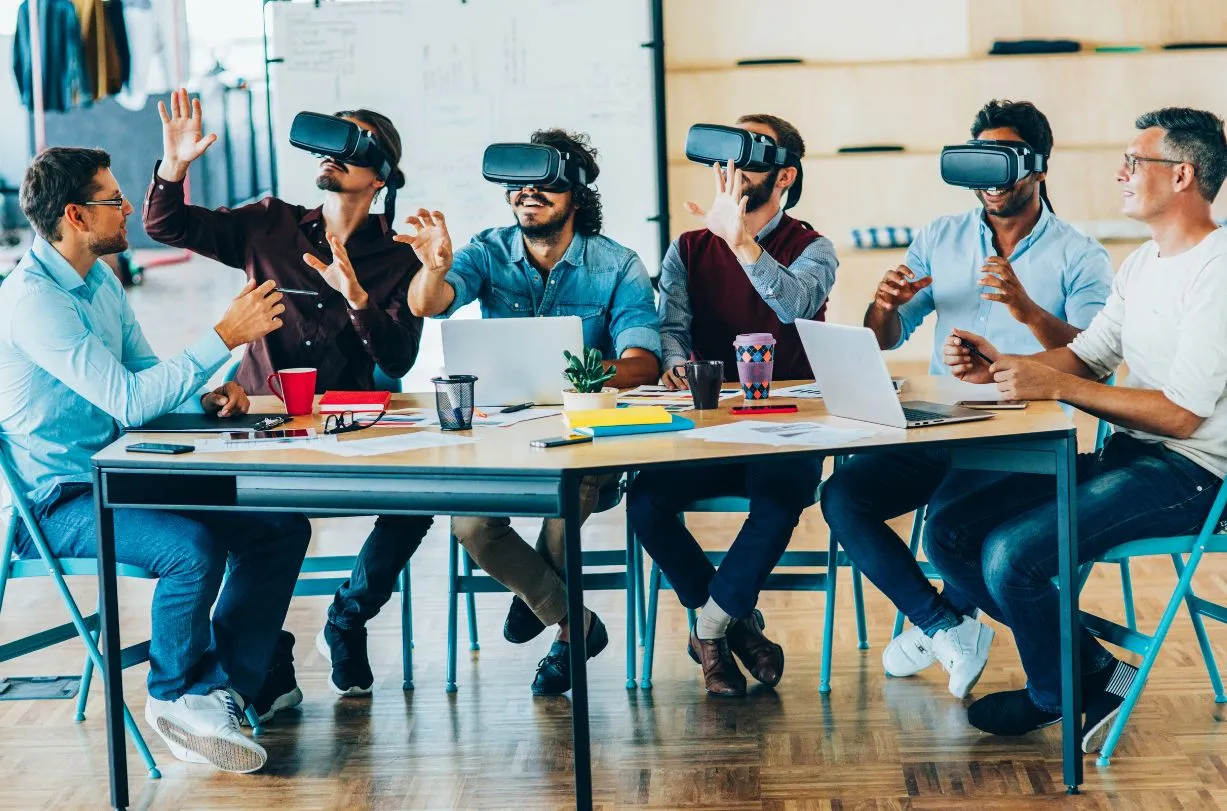
Virtual Reality is developing as a modern educational technology that delivers immersive learning experiences through realistic three dimensional digital simulations. This technology transforms the learning process into a more interactive, contextual, and easily understood experience for learners.
The use of Virtual Reality in education encourages comprehensive and sustainable digital learning transformation, allowing learners to explore subject matter directly through virtual environments that resemble real world conditions.
The Role Of Virtual Reality In Digital Education Transformation
Virtual Reality plays a vital role in digital education transformation by providing interactive learning experiences based on realistic simulations. This technology increases student engagement, making the learning process more effective and practice oriented.
Virtual environments allow students to explore complex concepts without the risks found in real world situations, ensuring learning remains safe and flexible while significantly and continuously improving subject comprehension.
Virtual Reality helps overcome limitations of space, time, and conventional educational facilities, expanding learning access and enabling more equitable opportunities to obtain high quality education.
This technology supports active, collaborative, and experiential learning methods, allowing interactions to increase naturally and student participation to become more optimal in every learning session.
With proper and continuous integration, Virtual Reality drives comprehensive innovation in modern education, making educational systems more adaptive and improving learning quality in line with technological advancement.
The Impact Of Virtual Reality On Modern Educational Technology
Virtual Reality has a major impact on modern educational technology through immersive, interactive, and simulation based learning experiences. This technology reshapes traditional learning approaches and significantly improves the effectiveness of educational processes.
1. Enhancing Immersive Learning Experiences
Virtual Reality creates immersive learning experiences that make students feel as if they are directly inside the learning material, increasing learning focus and maintaining student concentration for longer periods.
Three dimensional environments help students understand abstract concepts visually and contextually, making information easier to comprehend and the learning process more enjoyable and less monotonous.
Immersive experiences enhance students’ memory retention of learning materials, resulting in higher knowledge retention and consistently improved learning outcomes.
Virtual Reality based immersive learning encourages innovation in modern educational methods, making learning processes more dynamic and increasing student interest and motivation.
2. Supporting Safe Practical Learning
Virtual Reality enables high risk practical simulations to be conducted safely and in a controlled manner, allowing students to practice without danger while maintaining learner safety.
VR based simulations are used in virtual laboratories, medical education, and industrial engineering, creating realistic practical experiences and minimizing errors from an early stage.
Practical learning supported by Virtual Reality increases students’ confidence in applying skills, gradually improving competence and enhancing job readiness.
This technology supports experiential learning approaches, making learning more applicable and improving the overall quality of educational graduates.
3. Increasing Student Engagement and Motivation
Virtual Reality increases student engagement through direct interaction with responsive virtual learning environments, encouraging students to become more active and naturally increasing learning participation.
Engaging learning experiences enhance students’ intrinsic motivation, making learning enjoyable and increasing enthusiasm for participating in educational activities.
High engagement motivates students to explore learning materials independently, fostering curiosity and enhancing creativity.
Strong learning motivation directly contributes to improved academic outcomes, increasing student achievement and making the learning process more effective.
4. Supporting Distance Learning
Virtual Reality supports distance learning by providing interactive and collaborative virtual classrooms, ensuring interaction is maintained and learning quality improves.
Students and instructors can interact within the same virtual environment despite being in different locations, enabling effective collaboration and significantly reducing geographical barriers.
VR based distance learning feels more realistic than conventional online learning methods, increasing student engagement and maintaining learning focus.
This technology strengthens modern digital education systems, expanding learning access and significantly increasing learning flexibility.
5. Enhancing Understanding of Complex Concepts
Virtual Reality helps explain complex concepts through interactive and in depth three dimensional visualization, making abstract material more concrete and improving student understanding.
Virtual simulations allow students to observe processes in detail from various perspectives, enabling deeper analysis and reducing misconceptions.
Understanding complex concepts strongly supports learning in science, technology, and healthcare fields, improving academic competence and maintaining learning quality.
Virtual Reality technology enriches modern teaching methods, ensuring continuous educational innovation and more optimal learning outcomes.
6. Supporting Professional and Vocational Training
Virtual Reality is used in professional training to safely simulate real working conditions, allowing technical skills to be developed while minimizing workplace risks.
VR based training improves time and cost efficiency, accelerating learning processes and increasing participant productivity.
Work simulations help participants understand complex procedures before entering real work environments, improving competence and enhancing job readiness.
Virtual Reality becomes an effective solution for modern vocational education, raising training standards and strengthening workforce competitiveness.
Conclusion
Virtual Reality opens significant opportunities in modern educational technology through immersive, interactive, and realistic simulation based learning experiences. This technology improves learning quality and optimizes student engagement.
With continuous implementation, Virtual Reality has the potential to become a key pillar of future digital education transformation, making learning systems more adaptive and comprehensively enhancing human resource quality.