SPECIAL OFFER ✦ BUY 2 GET 1 FREE! ✦ ADD 3 PRODUCTS TO YOUR CART, AND THE DISCOUNT APPLIES AUTOMATICALLY!
SPECIAL OFFER ✦ BUY 2 GET 1 FREE! ✦ ADD 3 PRODUCTS TO YOUR CART, AND THE DISCOUNT APPLIES AUTOMATICALLY!
SPECIAL OFFER ✦ BUY 2 GET 1 FREE! ✦ ADD 3 PRODUCTS TO YOUR CART, AND THE DISCOUNT APPLIES AUTOMATICALLY!
SPECIAL OFFER ✦ BUY 2 GET 1 FREE! ✦ ADD 3 PRODUCTS TO YOUR CART, AND THE DISCOUNT APPLIES AUTOMATICALLY!
Virtual worlds recently dominated digital marketing discussions everywhere. However, the overall market reality has changed significantly today. According to CryptoSlate, virtual land values have crashed by roughly 97 and 99 percent. Many investors are now asking what happened to the metaverse.
This massive drop highlights a major shift in technology. Huge companies previously poured billions into building these digital spaces. Consequently, the initial public excitement has cooled down considerably. We must analyze this transition to understand future digital trends.
Key Takeaways:
Initial virtual reality investments faced huge technical and financial hurdles.
The technology industry has shifted its primary focus toward artificial intelligence.
Virtual environments still exist for specific practical business applications today.
What Is the Metaverse?
The concept refers to an immersive digital universe. Users interact within this space using virtual reality headsets. Additionally, they use digital avatars to represent themselves online. This creates a deeply engaging social experience for everyone.
Early developers envisioned it as the internet’s next evolution, promising a seamless transition between professional responsibilities and personal leisure. People could attend meetings and concerts in one digital environment. This bold vision drove massive early financial investments.
A prominent figure in this movement was the CEO of Meta. The initial Mark Zuckerberg metaverse vision was incredibly ambitious. He went as far as rebranding his entire company to align with this digital future, ultimately aiming to facilitate virtual connections for billions of users worldwide.
The initial enthusiasm met harsh real-world technological limitations. Firstly, the required hardware was too expensive for average consumers. This is because high-end headsets cost hundreds of dollars. Consequently, widespread mainstream adoption stalled very quickly.
Furthermore, the user experience often felt clunky and uncomfortable. Many digital spaces looked empty or lacked engaging activities. That is why user retention rates dropped significantly over time. People simply preferred traditional social media platforms instead.
Consequently, the tech industry’s primary focus has shifted toward generative artificial intelligence, which offers immediate and highly practical business solutions. This pivot has left many wondering about what happened to the metaverse hype today.
Despite the declining hype, specific applications remain active. Many industries still utilize these immersive platforms for practical purposes. Therefore, exploring current examples provides a clearer picture.
These active spaces focus heavily on niche digital utility. They do not try to replace the entire internet. Instead, they solve specific problems for targeted user groups. This focused approach yields much better operational results. By looking at these platforms, we see a realistic evolution, and the enterprise and entertainment sectors continue to experiment very cautiously.
1. Roblox
Roblox is incredibly successful among younger digital demographics. Millions of users log in daily to play diverse games. It essentially functions as a massive, user-generated digital universe.
Because the audience is so huge, brands are constantly jumping in to host virtual concerts or drop exclusive digital gear. This constant stream of activity has turned the platform into an incredibly profitable ecosystem that actually works.
2. Horizon Worlds
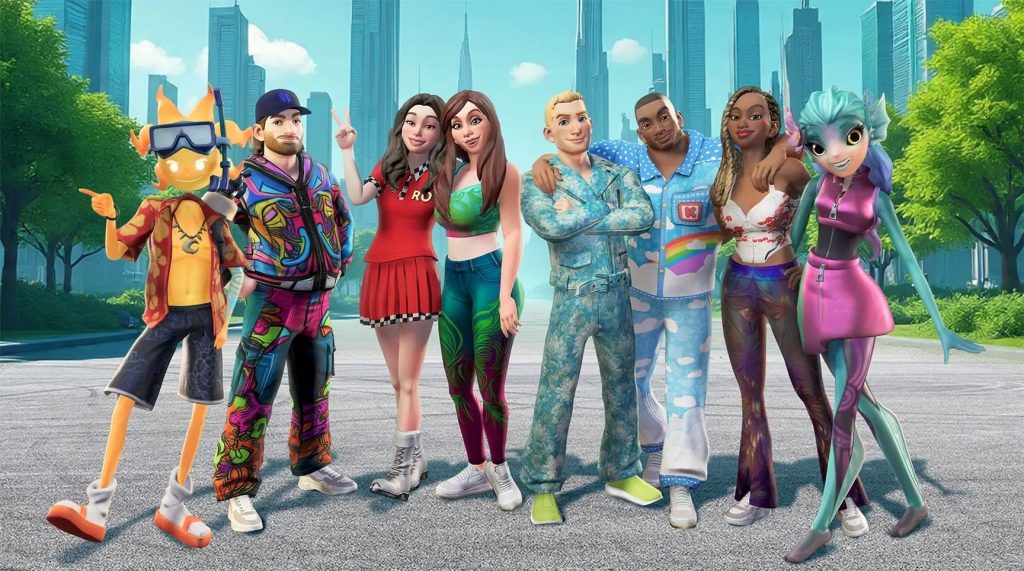
Alt: A diverse group of eight vibrant 3D digital avatars in unique, colorful outfits posing together on a paved street | Source: Meta
Horizon Worlds remains a primary example of social virtual reality. Meta continues to develop this platform for social gatherings. Within this ecosystem, users are empowered to construct custom environments and engage in collaborative gaming.
Despite its foundational role, the platform has faced challenges, with user growth trailing behind original projections. In response, Meta is aggressively pursuing technical upgrades to enhance graphical fidelity and overall visual appeal. Furthermore, the company is shifting its strategy to lower the barrier to entry by prioritizing seamless mobile access.
The Sandbox offers a distinctive, voxel-based virtual experience that bears a striking resemblance to popular block-building video games. This familiar aesthetic provides an intuitive foundation for its creative suite, where users can design digital assets and monetize their experiences with ease.
To drive early engagement, the platform leveraged high-profile partnerships, with numerous celebrities purchasing virtual land to establish a digital presence. This strategy successfully built a unique cultural bridge between mainstream entertainment and the metaverse. Today, it remains popular among dedicated blockchain gaming enthusiasts.
4. Decentraland
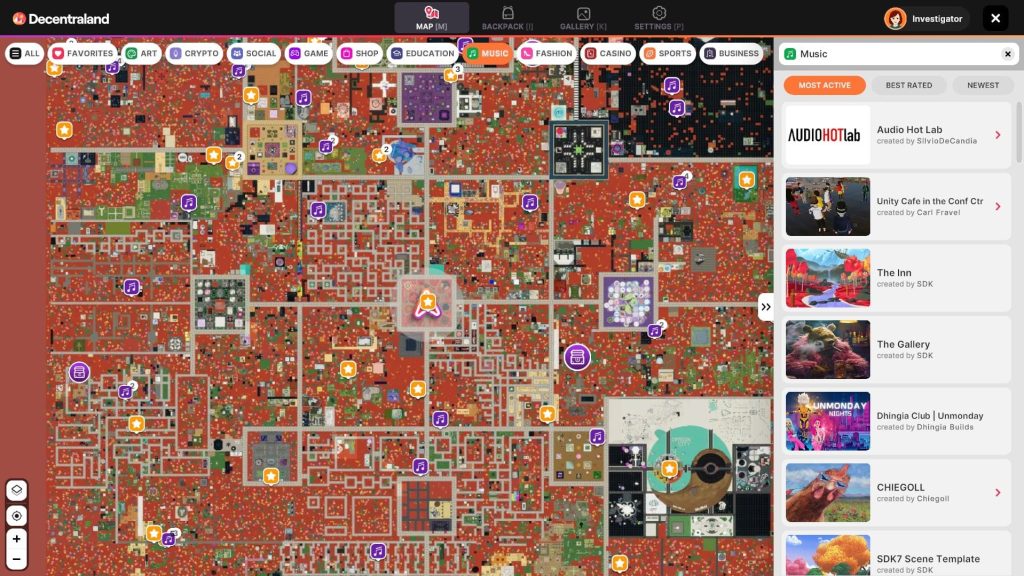
Alt: A detailed screenshot of the Decentraland virtual map interface showing a massive grid of red and grey digital land parcels | Source: Decentraland
Decentraland functions primarily as an open-source virtual ecosystem that enables individuals to buy and customize digital real estate. This platform relies heavily on blockchain technology for digital ownership.
Interest in this platform spiked during the cryptocurrency boom. Consequently, major brands opened virtual stores within its digital borders. Today, the active user base has stabilized significantly.
5. Nvidia Omniverse
Nvidia Omniverse focuses entirely on industrial and corporate applications. It allows engineers to collaborate on complex 3D designs. This happens in real-time across different global locations.
This platform emphasizes physical accuracy and highly realistic simulations above all else. Instead of hosting social hangouts, it’s used to build “digital twins” of factories and products. This precision provides massive value to global manufacturing companies.
Many critics constantly ask what happened to the metaverse. The concept is not entirely dead or completely abandoned. Instead, it is slowly evolving into more specialized applications. Developers are focusing on practical utility rather than massive hype.
Digital visuals remain crucial regardless of the platform used. Whether building virtual spaces or websites, high visual quality still matters. You can easily improve your current online marketing materials by simply using 3D objects from Tridimensi to enhance your digital assets.
Since premium elements make any digital experience more engaging, using professional 3D assets gives your brand a clear competitive edge. This approach is one of the most effective ways to capture and hold your audience’s attention.
Don’t settle for flat designs. Upgrade your visual strategy with premium 3D objects from Tridimensi today!