SPECIAL OFFER ✦ BUY 2 GET 1 FREE! ✦ ADD 3 PRODUCTS TO YOUR CART, AND THE DISCOUNT APPLIES AUTOMATICALLY!
SPECIAL OFFER ✦ BUY 2 GET 1 FREE! ✦ ADD 3 PRODUCTS TO YOUR CART, AND THE DISCOUNT APPLIES AUTOMATICALLY!
SPECIAL OFFER ✦ BUY 2 GET 1 FREE! ✦ ADD 3 PRODUCTS TO YOUR CART, AND THE DISCOUNT APPLIES AUTOMATICALLY!
SPECIAL OFFER ✦ BUY 2 GET 1 FREE! ✦ ADD 3 PRODUCTS TO YOUR CART, AND THE DISCOUNT APPLIES AUTOMATICALLY!
The generative AI impact on digital marketing 2026 is impossible to ignore, especially in content creation, personalization, and campaign automation. What started as an experiment is now a core part of how brands market themselves. As a result, marketers can create content faster and connect with audiences more personally.
Moreover, the shift is backed by a SAS survey where 61% of marketers say Generative AI improves personalization, while 58% see it driving innovation. Because of this, more brands are making AI a key part of their strategy. At the same time, it’s changing how marketers think and work. Curious how AI will impact digital marketing? Keep reading!
Key Takeaways
Generative AI enables rapid, large-scale content creation while maintaining brand consistency across all digital channels.
Real-time data analysis allows brands to deliver hyper-personalized experiences and product recommendations to individual users.
Generative AI is transforming marketing workflows by automating campaign planning, execution, and optimization, reducing manual effort and increasing speed to market.
5 Ways of Generative AI Impact on Digital Marketing in 2026
Below, we’ll present five ways of AI impact on business marketing strategies to redefine how brands connect with their audiences. Follow through!
1. Accelerated Content Production at Scale
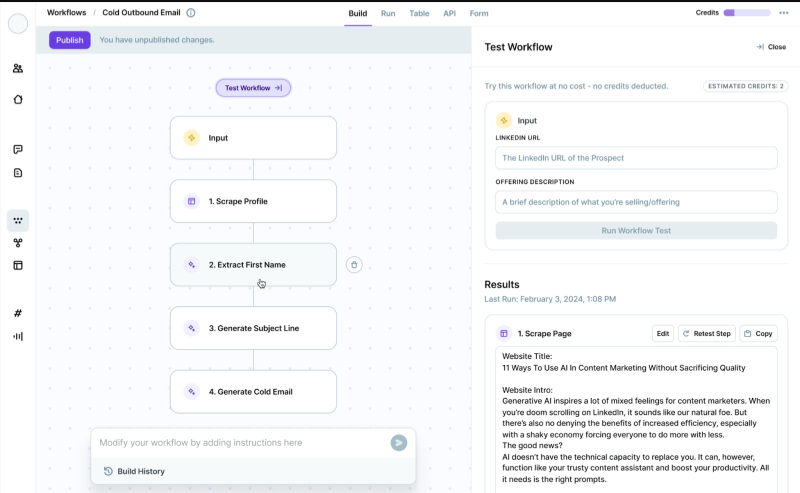
AI Content Generator Tool | Source: descript.com
One of the most visible impacts of generative AI is the speed at which content can be produced. AI tools can now generate blog posts, ad copy, email campaigns, social media captions, and even video scripts in a fraction of the time it would take a human team.
This acceleration allows brands to maintain a consistent content presence across multiple platforms. It also reduces production costs and enables faster experimentation with different content formats to ensure the messages remain aligned across channels.
Another major shift in the generative AI impact on digital marketing 2026 is the rise of hyper-personalization. AI systems can analyze user behavior, preferences, and interactions to deliver highly tailored experiences.
Instead of generic campaigns, brands can now create dynamic content that adapts to each user. From personalized product recommendations to customized email messaging, AI enables marketers to connect with audiences on a deeper level.
3. Smarter and More Efficient Campaign Management
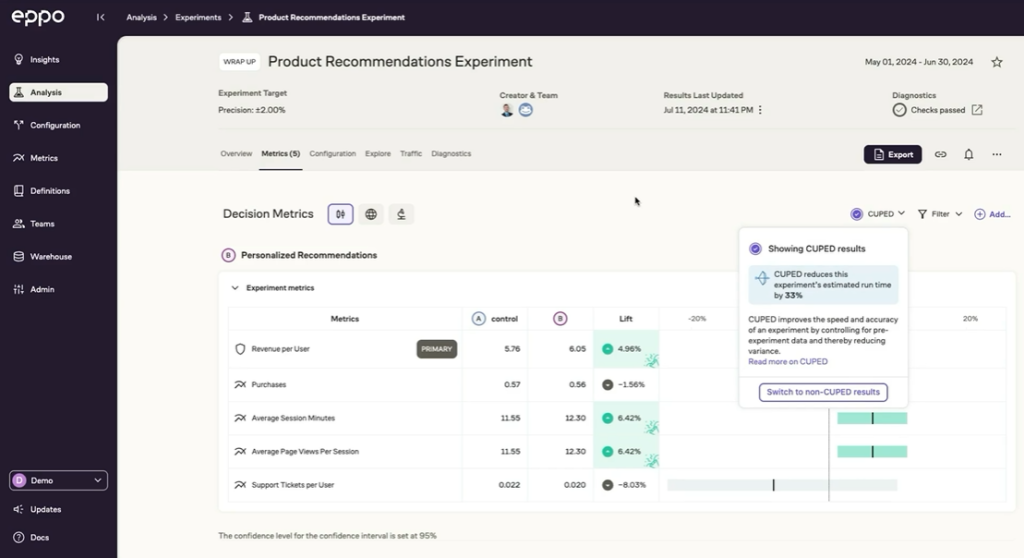
AI A/B Testing Tool | Source: cxl.com
Campaign management has become significantly more efficient thanks to AI. Tasks that once required manual effort, such as A/B testing, audience segmentation, and performance tracking, can now be automated.
AI can continuously monitor campaign performance and make real-time adjustments to optimize results. It can allocate budgets more effectively, identify high-performing channels, and predict outcomes before campaigns are fully executed. This automation allows marketers to focus less on operational tasks and more on strategy.
4. Enhanced Customer Insights and Predictive Analytics
Generative AI also plays a crucial role in understanding customer behavior. By analyzing large volumes of data, AI can uncover patterns and predict future actions. This enables marketers to anticipate customer needs, improve targeting accuracy, and design more effective customer journeys.
Beyond that, predictive analytics helps businesses move from reactive marketing to proactive strategy. For example, AI-powered customer service tools have been shown to improve efficiency and reduce response times by up to 80%, providing a significantly better customer experience.
5. Transformation of the Marketer’s Role
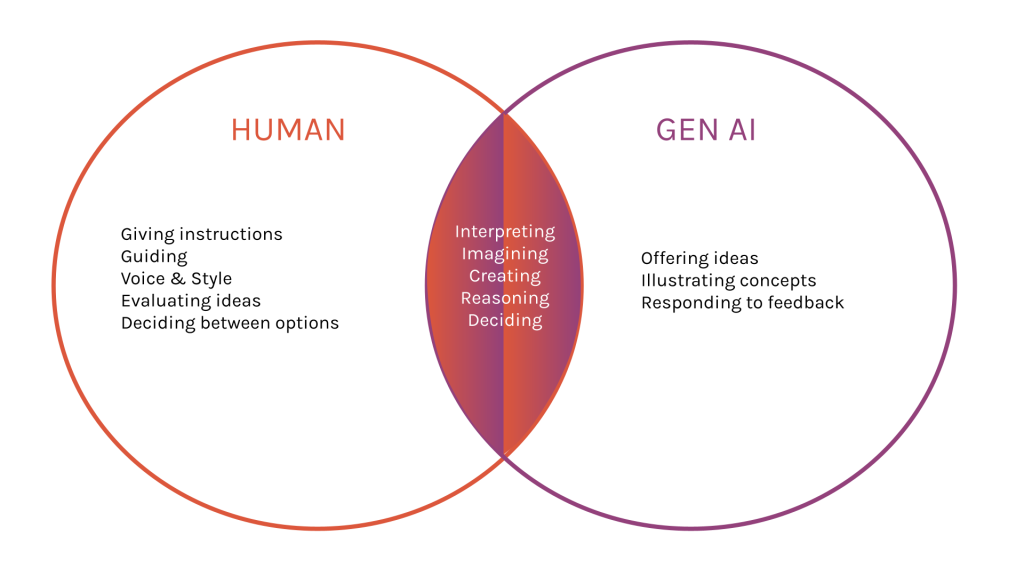
Human & AI Collaboration | Source: aug.co
As AI takes over repetitive and technical tasks, the role of marketers is evolving. They are no longer primarily focused on execution as they are becoming strategists, storytellers, and creative thinkers.
This aligns with emerging AI trends impacting marketing strategies in 2026, where human creativity becomes a key differentiator. AI handles the “how” (data and scale), while humans focus on the “why” (emotion and purpose).
Interestingly, industry discussions highlight that AI does not replace marketers. However, it exposes weak strategies and elevates the importance of real expertise and creativity.
Despite its advantages, the generative AI impact on digital marketing 2026 also presents several challenges that marketers must address, as detailed below:
AI-generated content risks being repetitive without proper human refinement.
Bias and misinformation in outputs require strict ethical oversight.
Low transparency in AI decisions can decrease audience trust.
Over-reliance on AI may weaken human creativity and strategy.
Strong governance ensures responsible and effective AI marketing use.
Turning Generative AI into a Competitive Advantage
The generative AI impact on digital marketing 2026 is undeniable. From accelerating content production to enabling hyper-personalization and transforming marketing roles, AI is reshaping the entire industry. However, the real opportunity lies in how businesses use this technology.
To truly stand out in an increasingly crowded digital landscape, marketers must also focus on the quality of their visual assets. One of many ways is through leveraging high-quality 3D design elements from Tridimensi. Finally, in 2026 and beyond, success in digital marketing will not be defined by who uses AI but by who uses it best.