SPECIAL OFFER ✦ BUY 2 GET 1 FREE! ✦ ADD 3 PRODUCTS TO YOUR CART, AND THE DISCOUNT APPLIES AUTOMATICALLY!
SPECIAL OFFER ✦ BUY 2 GET 1 FREE! ✦ ADD 3 PRODUCTS TO YOUR CART, AND THE DISCOUNT APPLIES AUTOMATICALLY!
SPECIAL OFFER ✦ BUY 2 GET 1 FREE! ✦ ADD 3 PRODUCTS TO YOUR CART, AND THE DISCOUNT APPLIES AUTOMATICALLY!
SPECIAL OFFER ✦ BUY 2 GET 1 FREE! ✦ ADD 3 PRODUCTS TO YOUR CART, AND THE DISCOUNT APPLIES AUTOMATICALLY!
Every eye-catching video or animation starts with the right tools. Motion graphics software opens endless possibilities, from subtle text animations to complex 3D effects. If you’re ready to explore what professionals and beginners alike rely on, this list is for you.
Key Takeaways:
For complex and refined animation work, tools like Adobe After Effects, Cinema 4D, and Autodesk Maya deliver professional-quality results.
If you’re seeking more affordable options, Blender offers powerful features for free, while Canva and Animaker provide user-friendly alternatives.
For those focusing on 2D animation, Toon Boom Harmony and Moho remain an excellent choice.
Best Motion Graphics Software to Explore in 2025
Our goal here is to make your search easier by outlining standout tools that cater to varying skill levels. We’ll cover features, pricing, and pros & cons. The question is: which one fits your goals? Let’s explore some of the strongest choices available today
1. Adobe After Effects
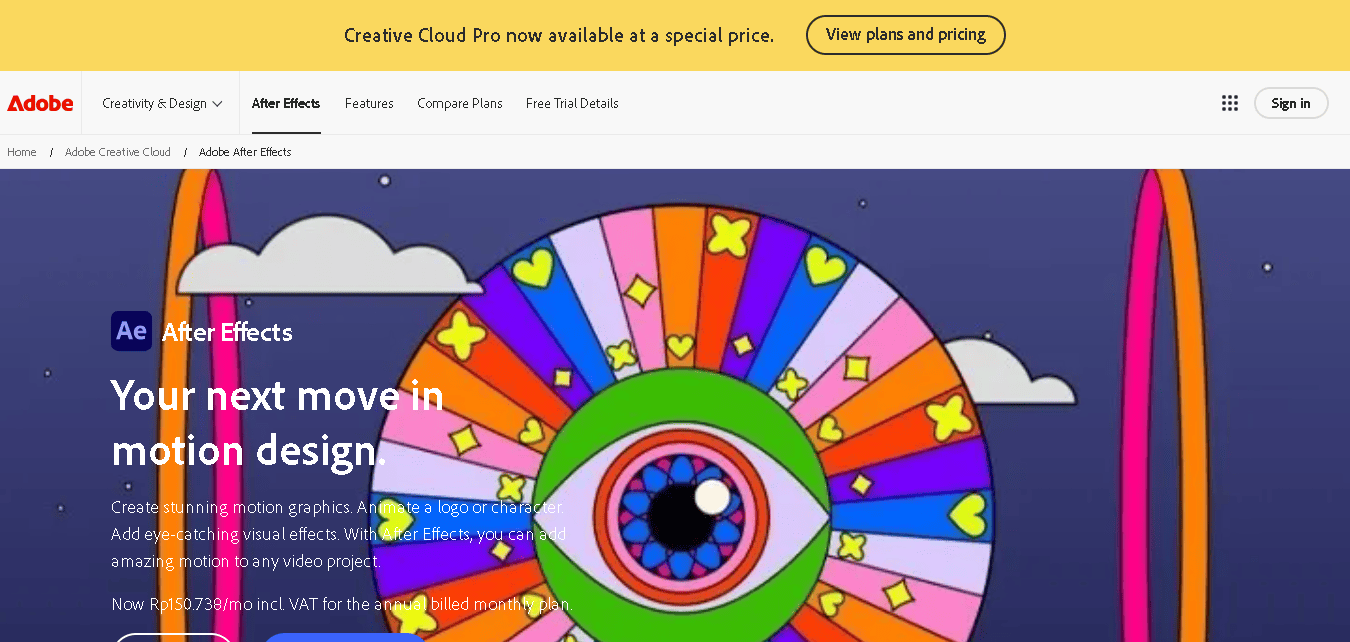
After Effects Landing Page (Source: Adobe)
Adobe After Effects is the go-to tool for advanced motion graphics, visual effects, and compositing. Professionals use it for precise 2D and 3D animation, with tight integration across Adobe Creative Cloud.
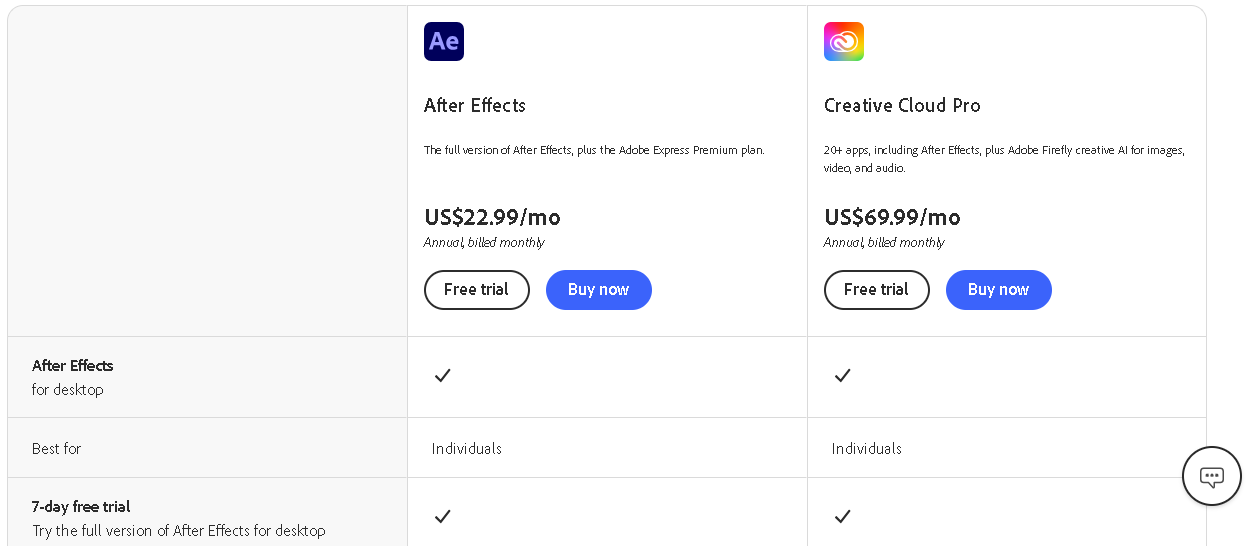
After Effects Pricing (Source: Adobe)
Advantages: Advanced 3D rendering, customizable workspaces, and a huge plugin library.
Key Features: Faster 3D previews, Shadow Catcher for realistic effects, character-level text controls, and GPU optimization.
Disadvantages: Steep learning curve and subscription-only pricing.
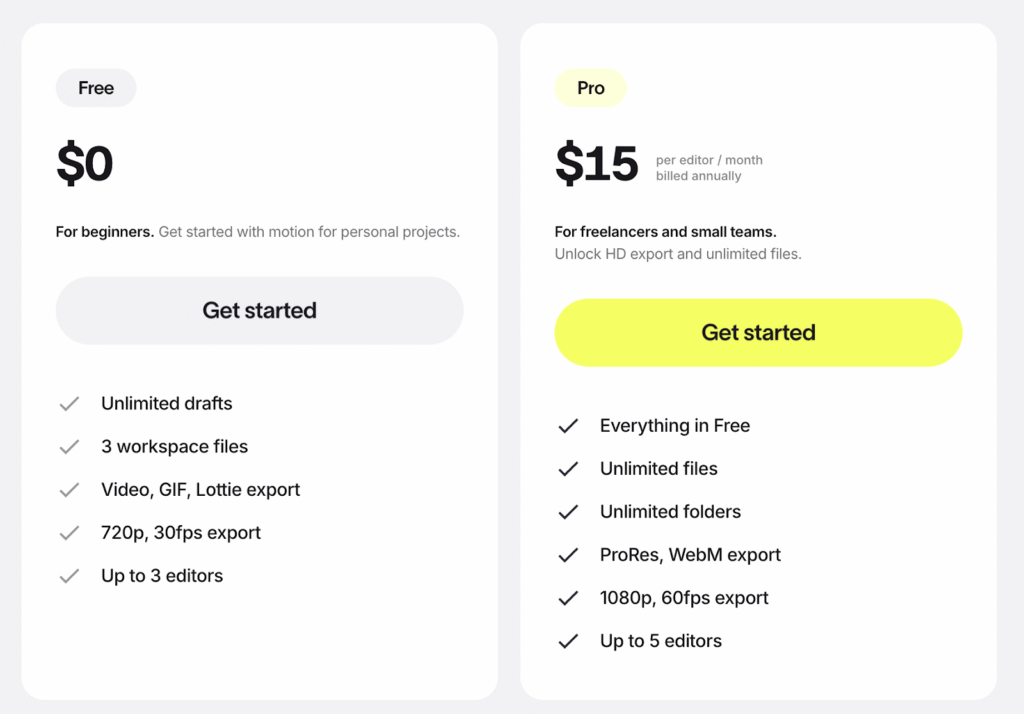
Pricing: About $20.99/month, or bundled with Creative Cloud.
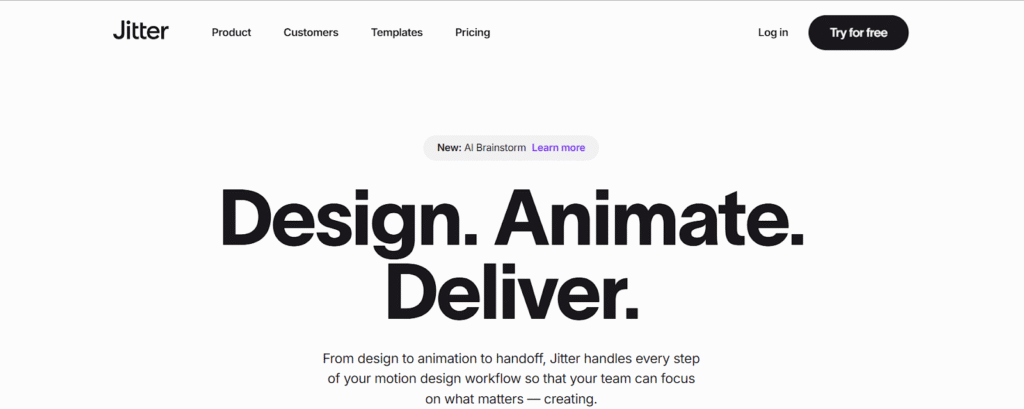
Jitter is a browser-based motion design tool for creating clean UI animations, social content, and quick motion graphics. Designers use it for fast, intuitive 2D animation with seamless Figma integration and real-time previews
Advantages: Extremely easy to use, real-time collaboration, lightweight in-browser workflow, and fast export options.
Key Features: Pre-built animation presets, UI-focused motion tools, Figma import support, timeline editing, and instant preview in the cloud.
Disadvantages: Less advanced for heavy VFX or complex 3D work; relies on internet connection.
Pricing: Offers a free plan with essential features; paid plans unlock higher-resolution exports and advanced tools.
3. Cinema 4D
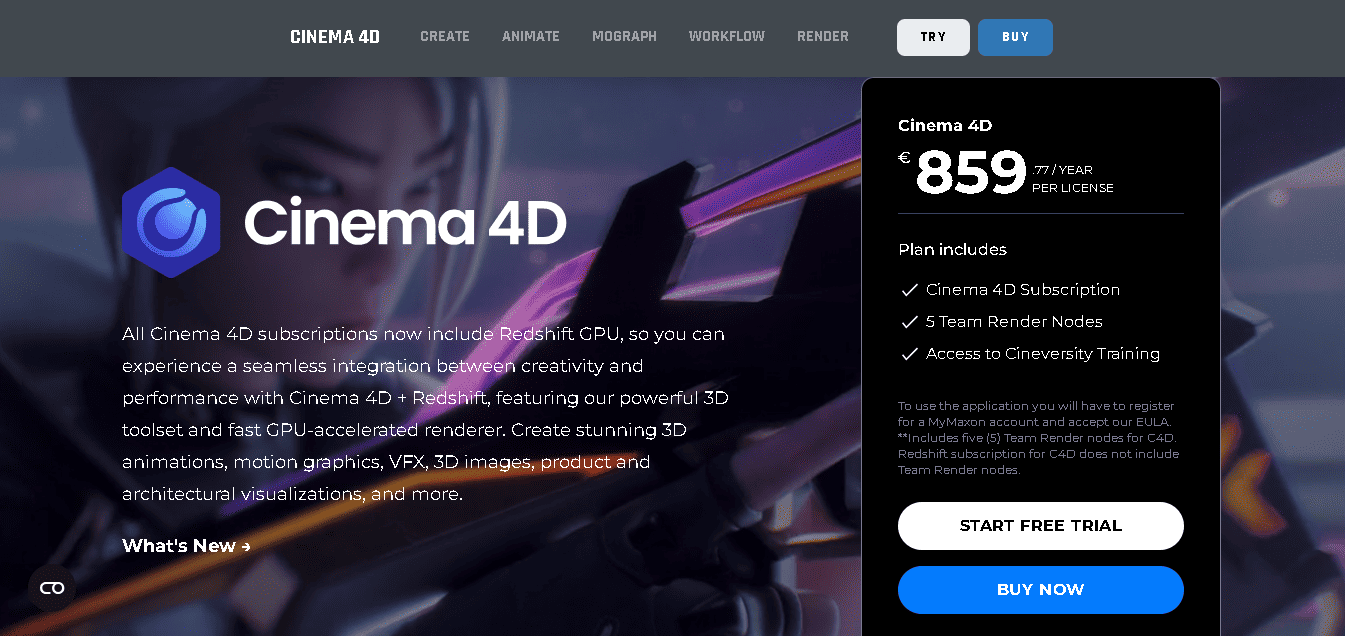
Cinema 4D (Source: Maxon)
Cinema 4D is widely recognized as a motion graphic design software thanks to its intuitive workflow and MoGraph toolkit. Used in film, advertising, and broadcasting, it helps designers produce high-quality visuals quickly.
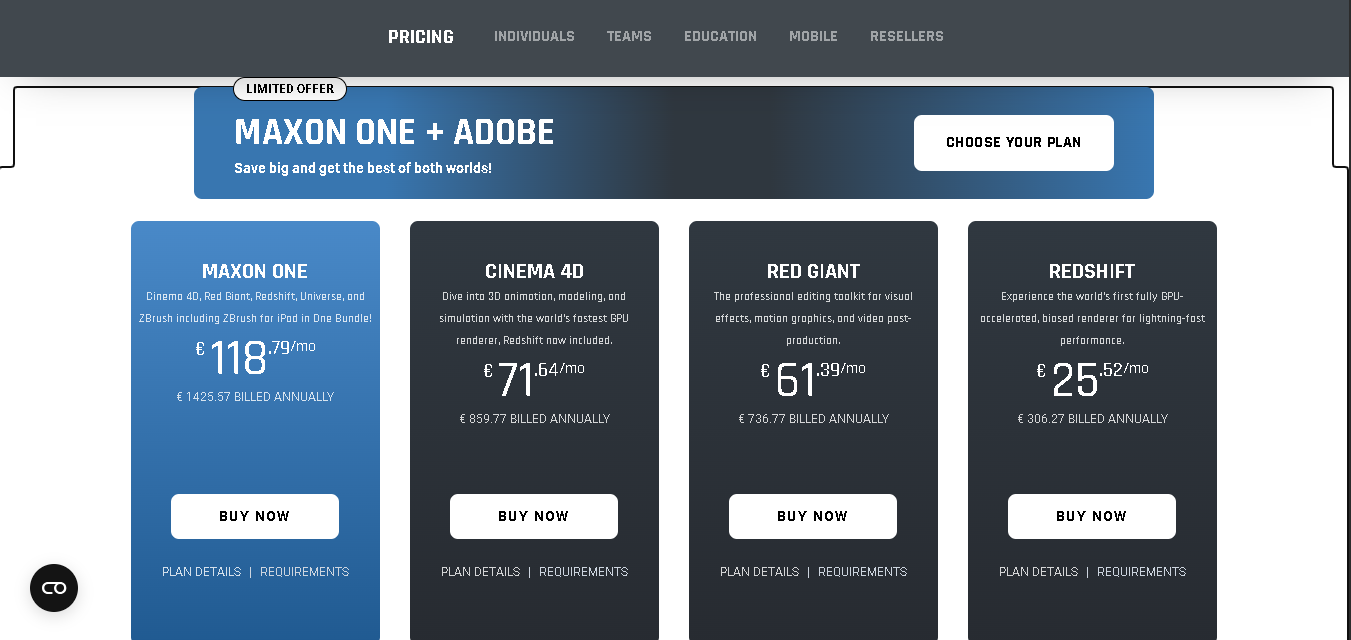
Cinema 4D Plans (Source: Maxon)
Advantages: Powerful MoGraph system, strong Adobe integration, and reliable stability.
Key Features: Procedural modeling, physics simulations, Redshift renderer, and character animation tools.
Disadvantages: It’s relatively expensive and requires strong hardware to run smoothly.
Pricing: Subscription plans start at around $94/month, with licensing tiers available.
4. Autodesk Maya
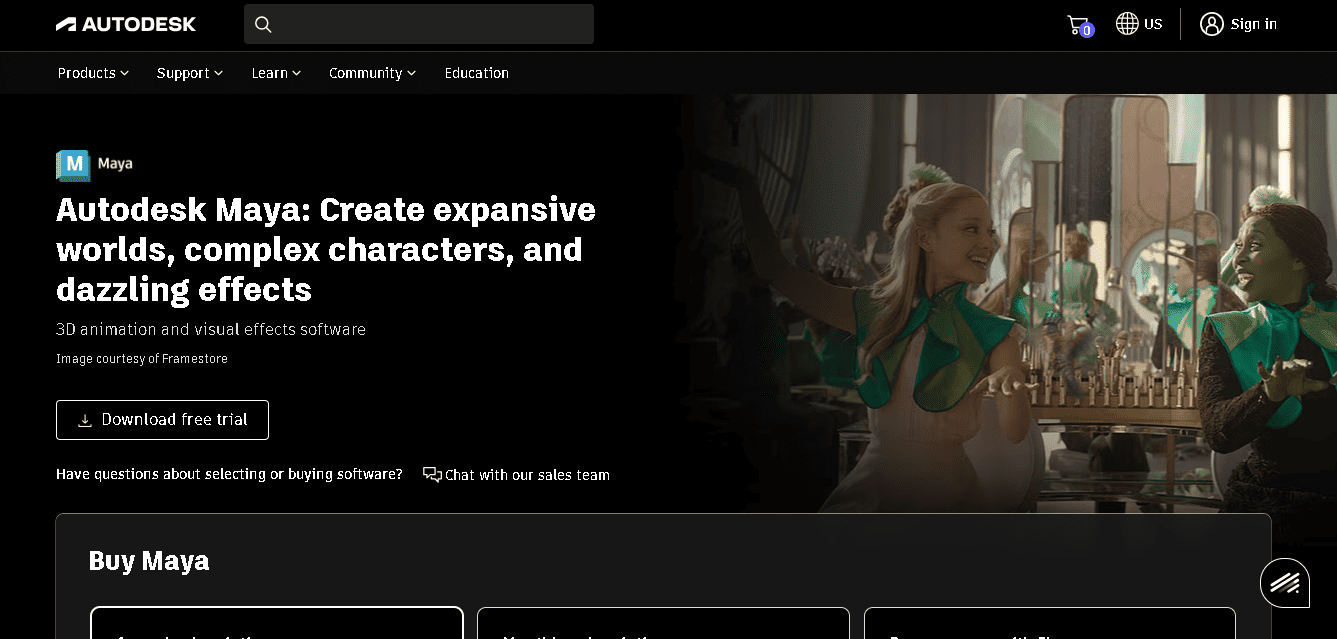
Autodesk Maya (Source: Autodesk)
Autodesk Maya is a powerhouse in the world of 3D, widely adopted in film, gaming, and television industries. With its extensive animation and modeling tools, this motion graphics designer software is best suited for advanced users who want to integrate motion graphics into complex 3D environments.
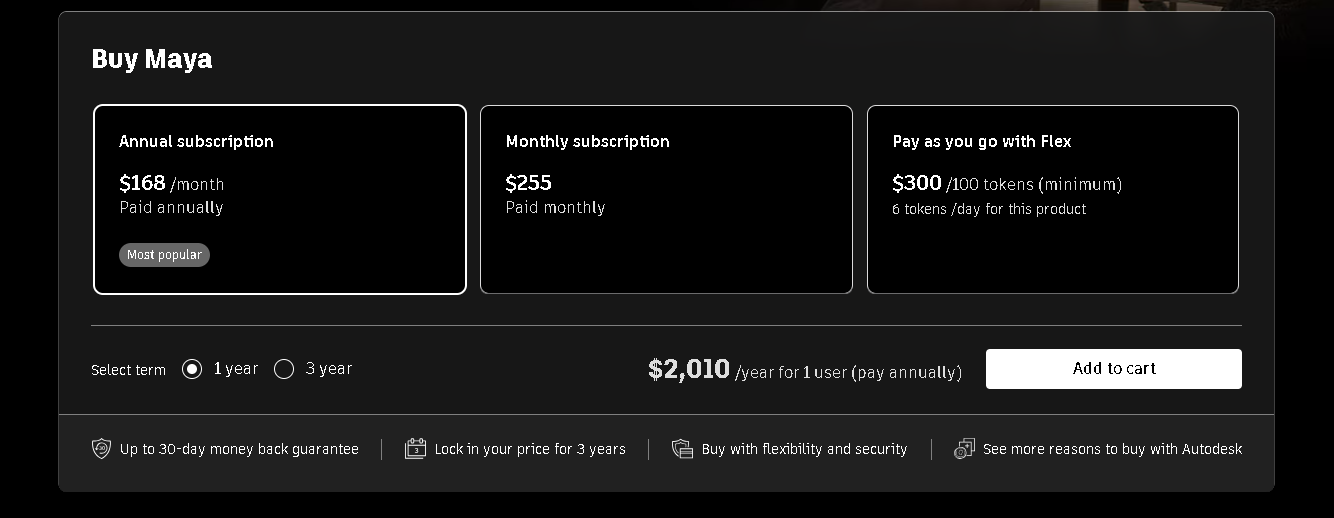
Maya Pricing (Source: Autodesk)
Advantages: Industry-leading rigging and animation features, plus extensive scripting and plugin support.
Key Features: Complex character rigs, fluid simulations, and Arnold renderer integration.
Disadvantages: Very steep learning curve, costly plans, and demanding system needs.
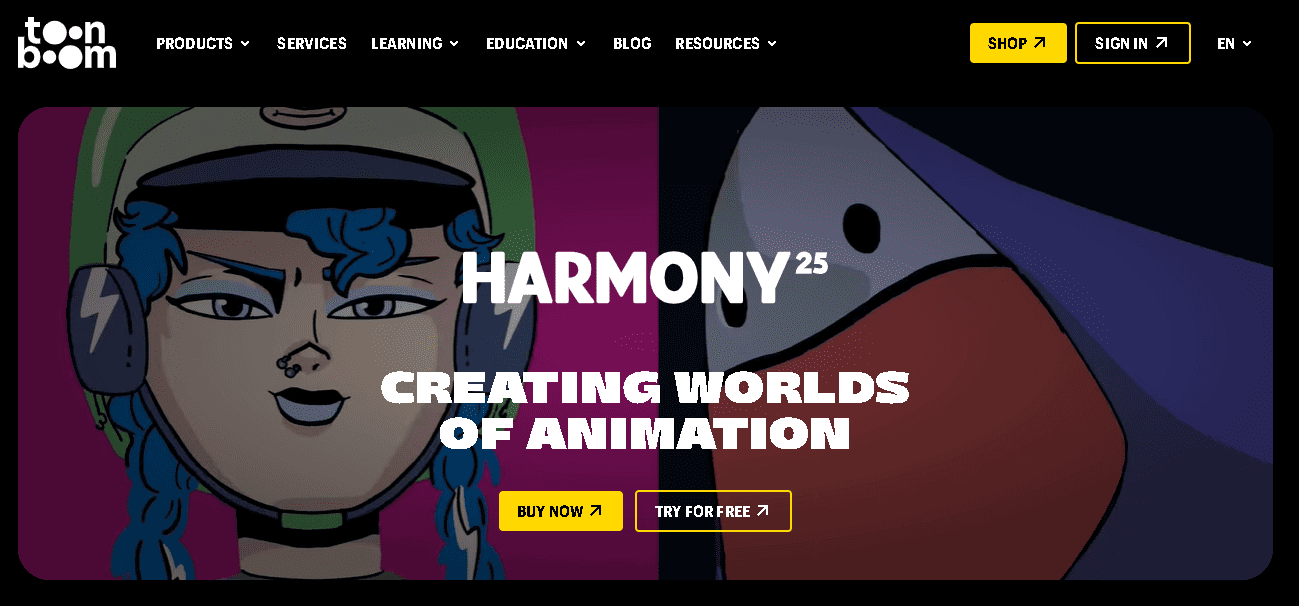
Toon Boom Harmony is a cornerstone in 2D animation production, powering many well-known TV shows and web series. It caters to a range of users, from beginners to seasoned professionals, offering both frame-by-frame animation and rig-based workflows.
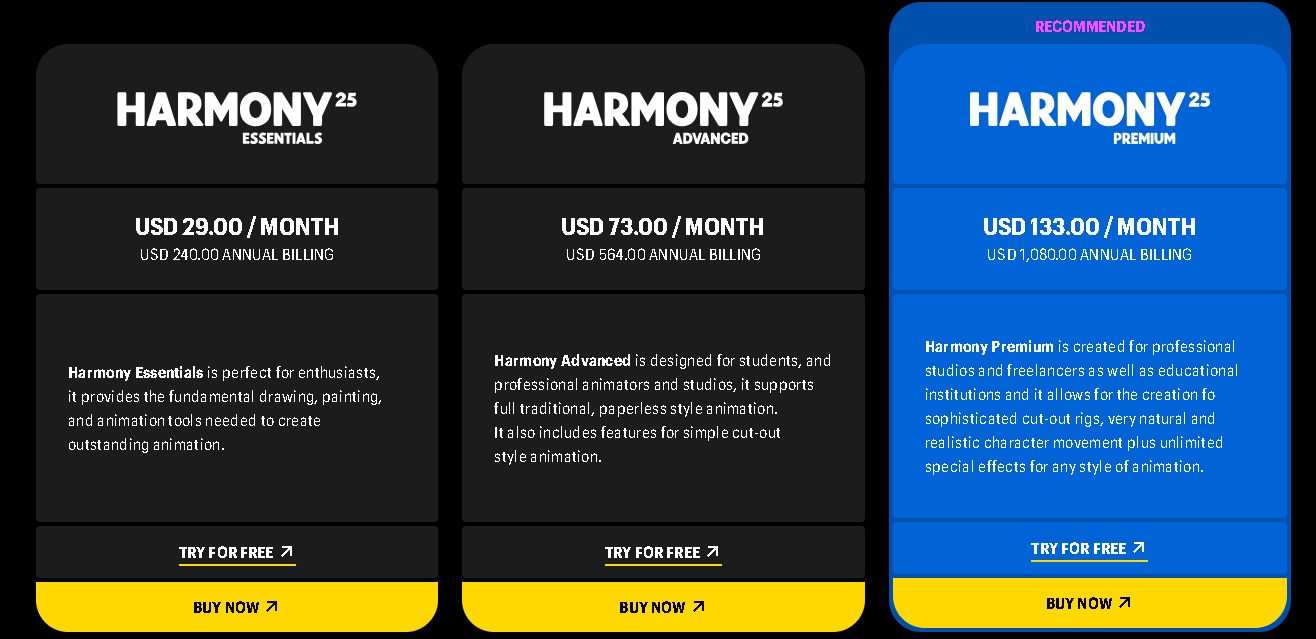
Harmony Pricing (Source: Toon Boom)
Advantages: Excellent for character animation with vector and bitmap tools.
Key Features: Advanced rigging, multi-plane camera, volumetric lighting, and team collaboration.
Disadvantages: Premium tiers can be pricey and complex.
Pricing: From $25/month (Essentials) to $75/month (Premium).
6. Canva
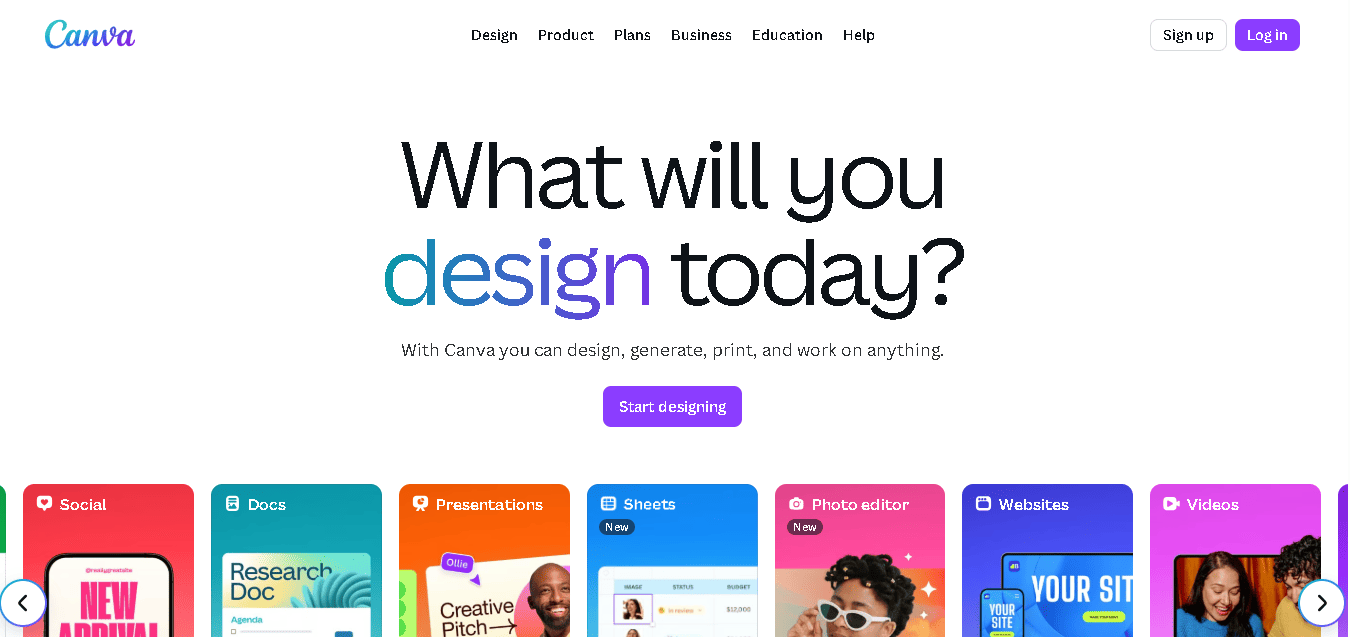
Canva Website (Source: Canva)
Canva has evolved into an easy motion graphics software for simple animated content, especially on social media. It’s designed for beginners or marketers who want fast, stylish visuals without technical expertise.
Canva Pricing (Source: Canva)
Advantages: Web-based, drag-and-drop interface, and large template library.
Key Features: Animated templates, timeline editing, and broad stock media access
Disadvantages: Limited customization and requires an internet connection.
Pricing: Free plan; Pro version $12.99/month.
7. Animaker
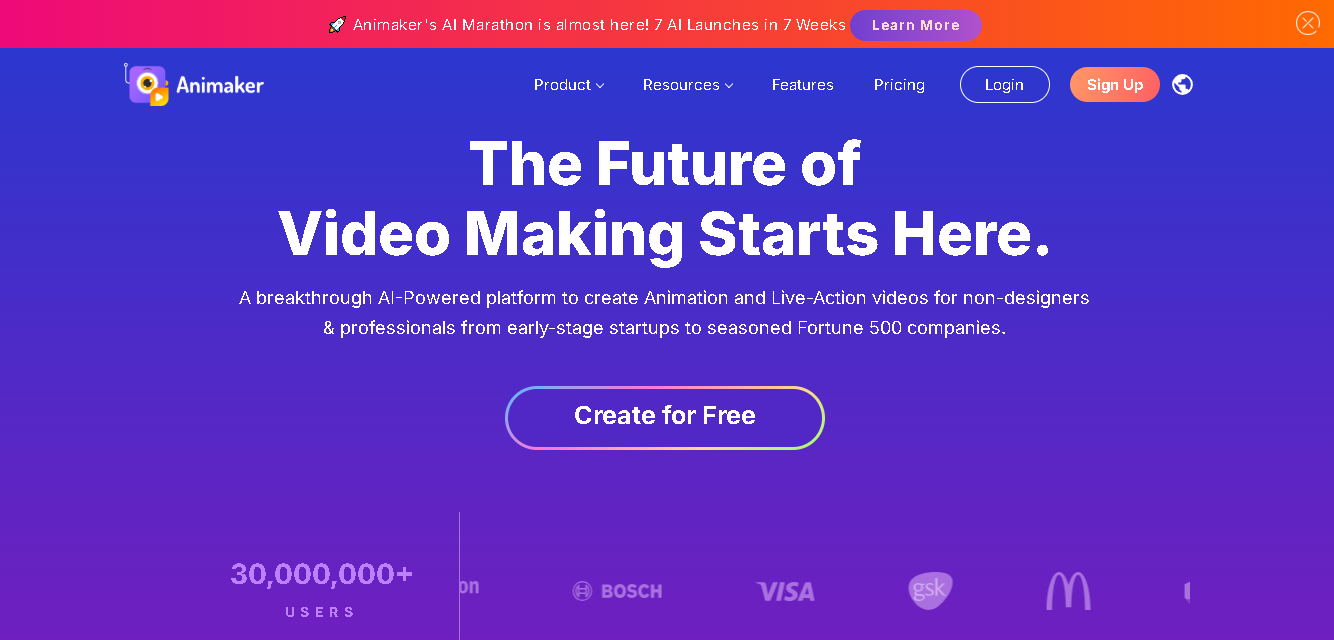
Animaker (Source: Animaker)
Animaker is a browser-based tool that empowers users to create explainer videos and simple animations without professional experience. Its drag-and-drop workflow and template-driven design make it popular among marketers and small businesses.
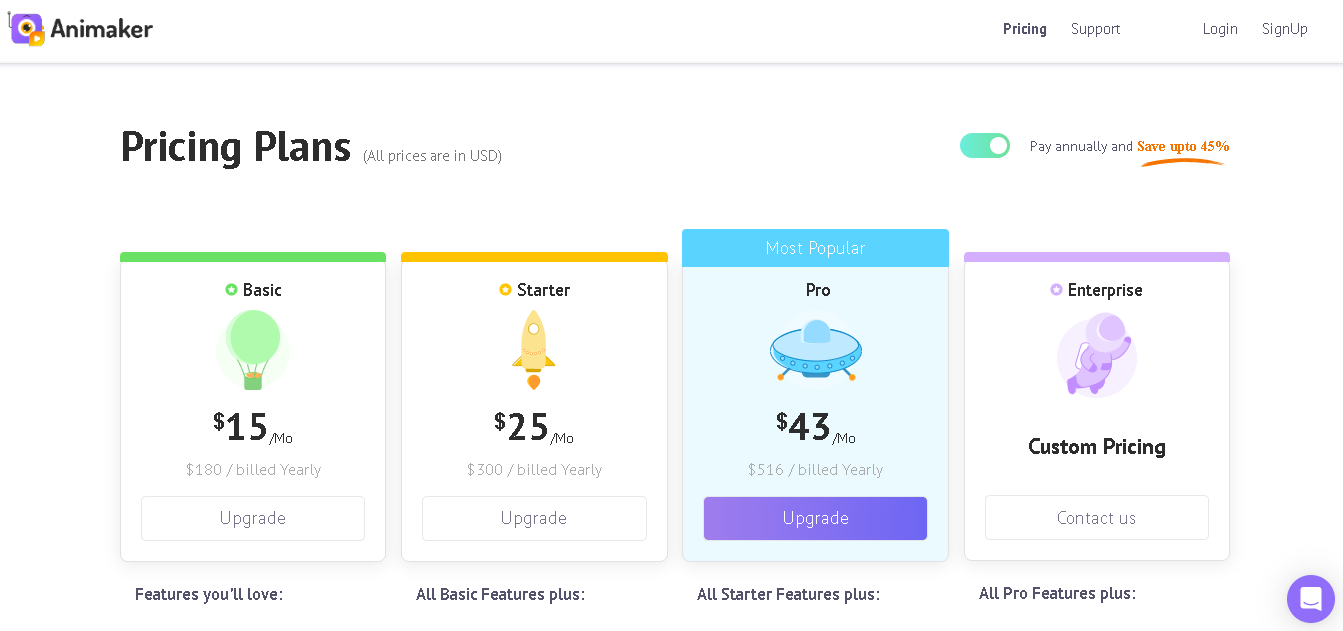
Animaker Pricing Plans (Source: Animaker)
Advantages: No animation skills needed, team-friendly platform, and quick results.
Key Features: Prebuilt characters, text animations, stock assets, and voiceover tools.
Disadvantages: Limited advanced features, with premium tools behind paywalls.
Pricing: Free version; paid plans start at $10/month.
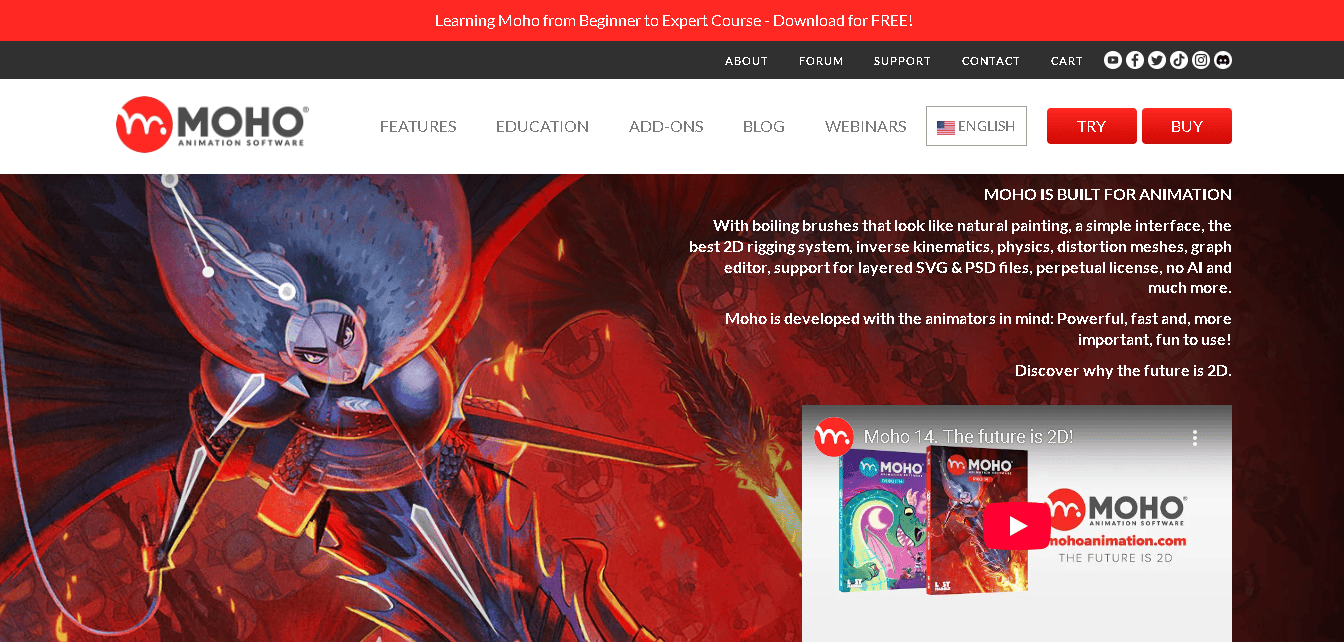
Moho is a dedicated 2D animation and motion graphics tool, striking a balance between accessibility and professional-grade features. It’s often used in TV production and online content thanks to its powerful rigging system.
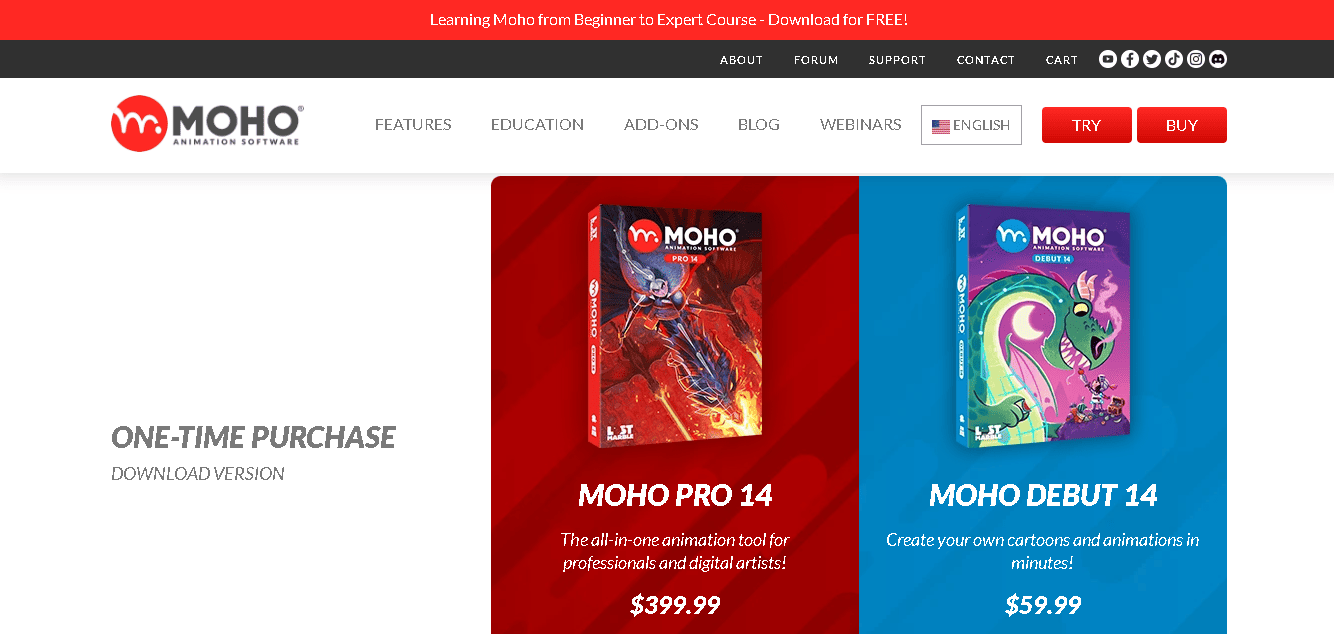
Moho Pricing (Source: Moho)
Advantages: Vector-based, smart bone rigging, and a versatile timeline editor.
Key Features: Frame-by-frame or rigged animation, physics-based motion, and lip-sync support.
Disadvantages: Less feature-rich than larger platforms, with some UI quirks.
Pricing: Moho Debut is $59.99 (one-time), while Moho Pro is $399.99.
Creative work thrives when paired with the right tools. By understanding what each platform offers, you’ll be better equipped to decide which path to take. Remember that mastery comes with practice, so whichever tool you start with, let it inspire growth in your design journey.
At the end of the day, the best designs are the ones that move people, both literally and emotionally. That’s what we focus on at Tridimensi. Our creative elements are ready to help you explore creative possibilities and bring your stories to life with motion and style.