SPECIAL OFFER ✦ BUY 2 GET 1 FREE! ✦ ADD 3 PRODUCTS TO YOUR CART, AND THE DISCOUNT APPLIES AUTOMATICALLY!
SPECIAL OFFER ✦ BUY 2 GET 1 FREE! ✦ ADD 3 PRODUCTS TO YOUR CART, AND THE DISCOUNT APPLIES AUTOMATICALLY!
SPECIAL OFFER ✦ BUY 2 GET 1 FREE! ✦ ADD 3 PRODUCTS TO YOUR CART, AND THE DISCOUNT APPLIES AUTOMATICALLY!
SPECIAL OFFER ✦ BUY 2 GET 1 FREE! ✦ ADD 3 PRODUCTS TO YOUR CART, AND THE DISCOUNT APPLIES AUTOMATICALLY!
Meta description: Explore recent examples of virtual reality at consumer exhibitions to see how brands create immersive experiences for potential customers!
Slug: virtual-reality-at-consumer-exhibitions
As audiences seek more engaging experiences, virtual reality at consumer exhibitions is gaining rapid popularity. With its ability to deliver immersive, interactive environments, it’s becoming a powerful tool for exhibitions looking to capture attention and stand out.
Key Takeaways:
Virtual reality at consumer exhibitions removes physical limitations and lets brands deliver immersive 360-degree product and environment experiences that boost engagement and recall.
Brands use VR for applications like virtual tours, test drives, and shared environments, with real-world examples seen at major events like CES and AWE.
VR increases brand differentiation and speeds up purchase decisions, but brands still face challenges with cost, setup complexity, and user accessibility.
Why Brands Are Now Using Virtual Reality for Consumer Exhibitions
Traditional display methods, while effective, often limit what brands can showcase due to physical space, shipping logistics, and setup complexity. For example, a car brand cannot present multiple vehicle variants in a single booth, and a property developer cannot build a full-scale model apartment on an exhibition floor.
VR exhibitions help overcome these limitations by removing physical constraints. It allows visitors to explore products, environments, or service scenarios through fully immersive, 360-degree experiences.
In addition to flexibility, immersive experiences are more memorable. In fact, according to VR for Events, people have a 70% chance of remembering something from an immersive experience over traditional advertising. As a result, many brands are adopting virtual reality to create more impactful and lasting impressions.
How Can Virtual Reality Be Used in Exhibitions?
So, how can event organizers use VR technology to improve their exhibitions? At a basic level, brands can set up VR stations where visitors can experience activities such as:
360-degree product and unconstructed building tour
Factory walkthrough
Simulated test drive
Virtual stores for retail brands
For more advanced implementations, VR can place multiple users in a shared virtual environment. This allows visitors to explore exhibitions together in real time, creating a more social and interactive experience.
5 Real-World VR Applications at Consumer Exhibitions in Recent Years
To give you an idea of how virtual reality at consumer exhibitions works, here are the real-life cases.
1. CES 2025, Las Vegas, January 2025 (Technology)
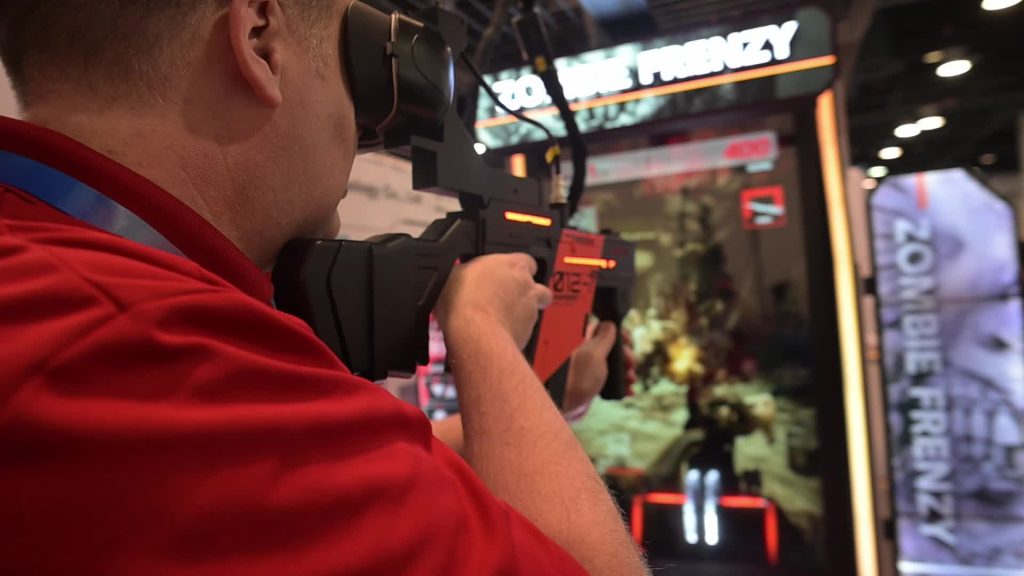
Oculeap in CES 2025 (Source: EditorialFootage)
The Consumer Electronics Show 2025 featured VR exhibitors who used immersive headset experiences to demonstrate hardware capabilities and software ecosystems. During the exhibition, Oculeap attracted crowds with interactive VR gameplay designed to demonstrate real-time product performance.
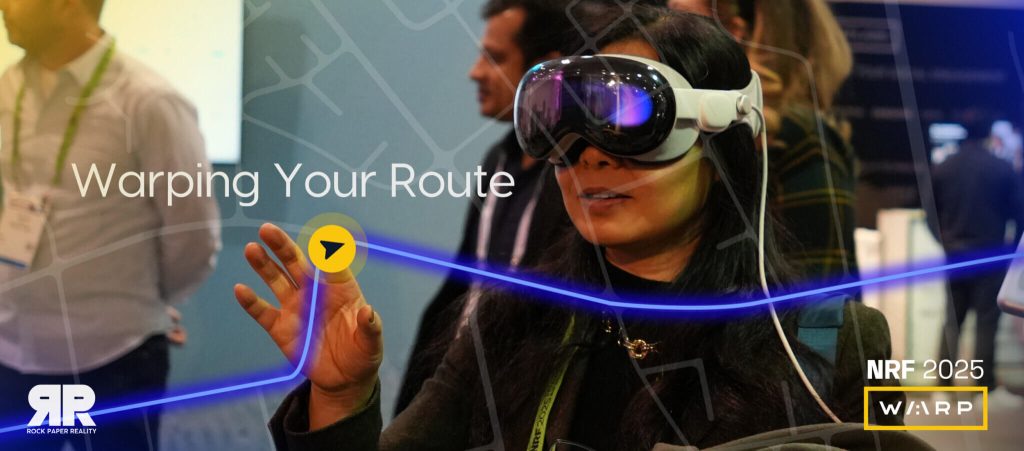
At the National Retail Federation’s flagship event, logistics brand Warp used the Apple Vision Pro experience. With it, Warp successfully transformed complex supply chain data into a navigable, visual story explorable from multiple angles.
3. Australian Property Expo 2024, Australia, June 2024 (Property)
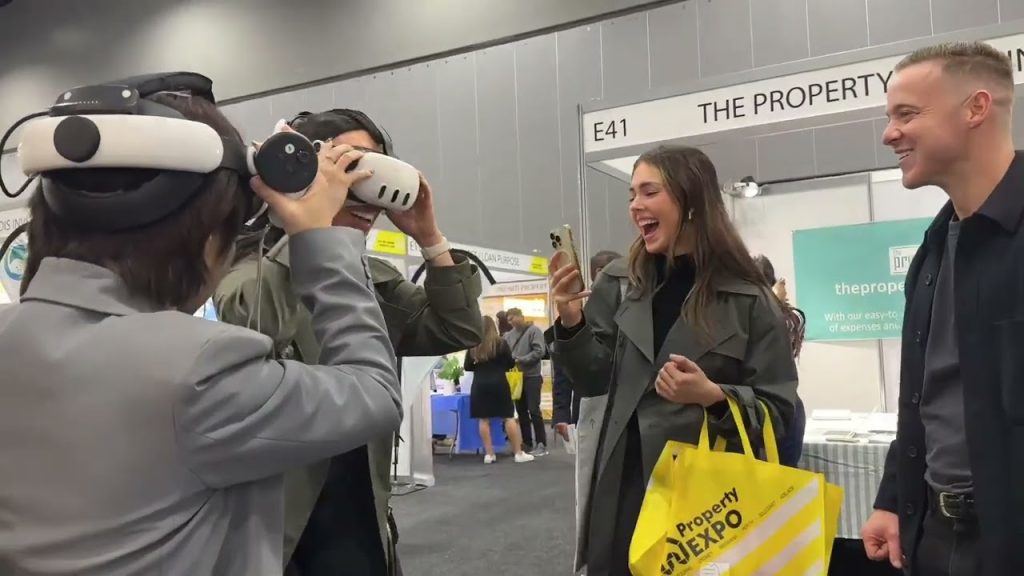
VNi in Australian Property Expo 2024 (Source: YouTube)
The next one is the Australian Property Expo 2024, which saw VNi, a Vietnam-based service in providing 360-degree VR property tours. Thanks to that, VNi managed to attract interested visitors who want to experience the property tours virtually during the event.
4. Driving Simulation Conference 2024 Europe, France, (Automotive Technology)
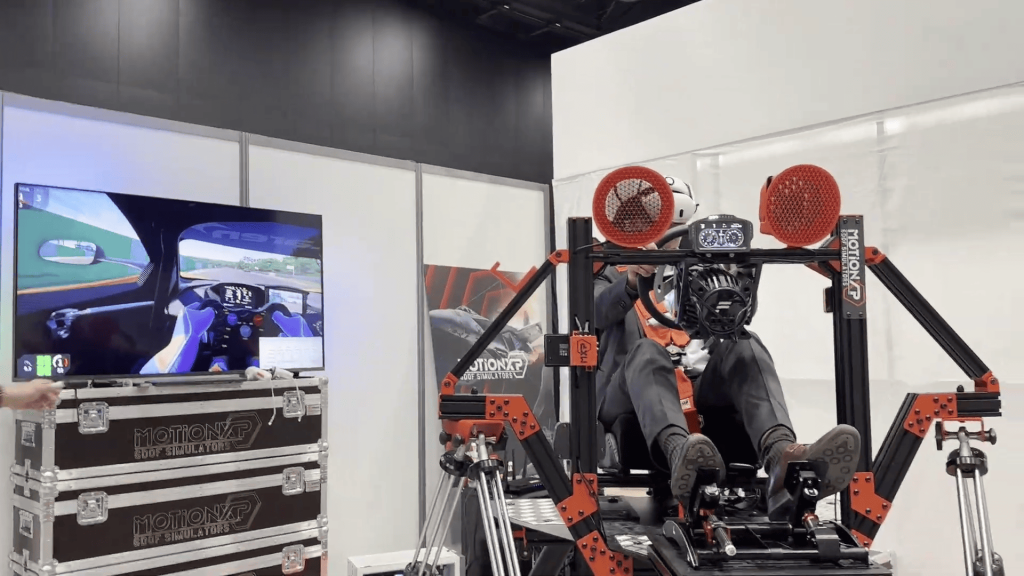
One exhibition booth in DSC Europe 2024 (Source: YouTube)
The Driving Simulation Conference (DSC) Europe in 2024 functioned as both a showcase for VR products and a live laboratory for exhibition stand design in immersive technology. In the event, exhibitors demonstrated how industry specialists integrate VR into their showcase in safety practices when driving.
5. AWE Asia 2026, Singapore, February 2026 (Retail and Consumer XR)
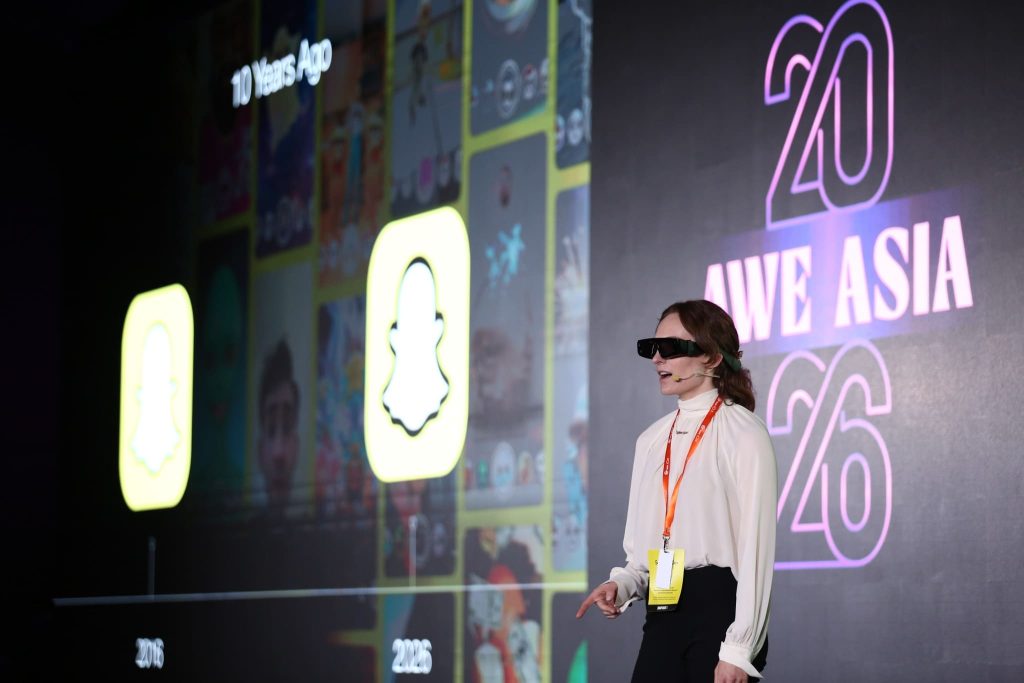
One exhibitor in AWE Asia 2026 (Source: AWE Asia)
Lastly, there’s AWE Asia 2026, which brought over exhibitors from Cognitive3D to SCash Global together to demonstrate extended VR applications. Here, everyone from various industries used VR to experience more immersive environments and products.
From the examples above, what tangible benefits can brands gain by using virtual reality at consumer exhibitions?
Higher Brand Recall: VR experiences help visitors remember a brand long after the event ends.
Faster Purchase Decisions: Immersive product experiences allow visitors to evaluate offerings more thoroughly within a single session, speeding up decision-making.
Stronger Differentiation: VR helps brands stand out in crowded exhibition spaces where multiple competitors compete for attention.
Challenges Brands Face When Implementing VR at Exhibitions
Implementing VR to improve exhibitions still presents several challenges for many brands. Equipment setup, device charging, and hygiene management all require dedicated technical staff throughout the event.
Not to mention, some audience segments, particularly older visitors, are often less comfortable with headsets. Because of that, booths may still need physical product demonstrations to convince their older customer bases.
Furthermore, the high cost of VR devices means not every brand can afford a large-scale implementation. Smaller brands may be limited to a single device or may need to rely more on traditional marketing approaches.
Make VR Exhibitions Stand Out More with the Best Resources
From the examples of virtual reality at consumer exhibitions above, we can see how brands can create more immersive product experiences. Despite the challenges, VR has nonetheless settled itself as the future of experimental marketing in the upcoming years.
To help your exhibition stand designers with virtual preview options, explore 3D resources from Tridimensi to support your consumer exhibitions. With high-quality 3D assets, you can create more premium virtual booths and stand out from competitors.